Daily Word: John 20:24-29 – Doubt That Leads to Faith | Feast of St. Thomas, July 3
Thomas doubted — and his doubt became a gateway to the most profound confession of faith. A 4-minute reflection on the mercy of Jesus for those who question.
DAILY WORD
spwworship
7/3/20264 min read
Scripture Reference:
John 20:24-29 (Feast of St. Thomas the Apostle – Year A)
“My Lord and my God!” (John 20:28)
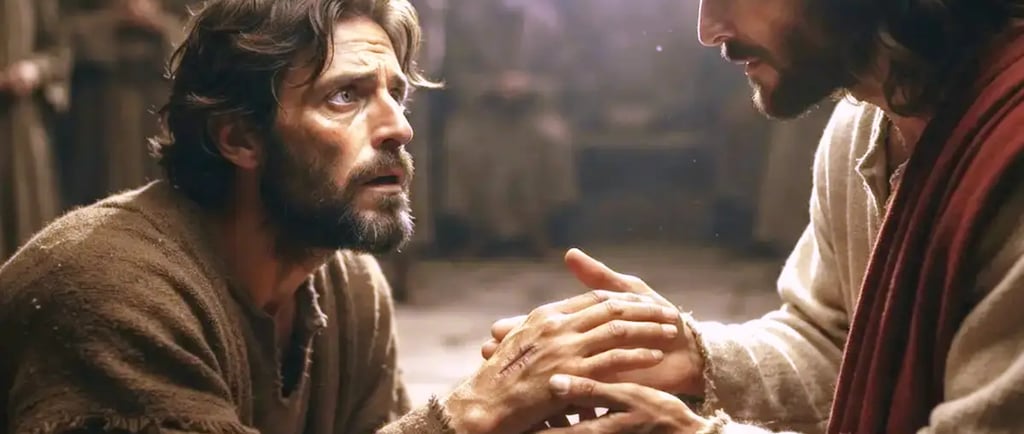
Thomas was not with the others when Jesus appeared on Easter evening. Perhaps he was grieving alone, withdrawn in his sorrow. When the disciples tell him, “We have seen the Lord,” he refuses to believe. His condition is famously stark: “Unless I see the mark of the nails in his hands and put my finger into the nailmarks and put my hand into his side, I will not believe.”
Thomas wants evidence. He wants the physical proof that the suffering Jesus endured is real. He does not want a ghost or a vision; he wants the wounded flesh of the crucified Lord.
A week passes. The disciples are gathered again. This time, Thomas is with them. Jesus appears, stands in their midst, and says: “Peace be with you.” Then He turns to Thomas — not with rebuke, but with an invitation: “Put your finger here and see my hands. Reach out your hand and put it into my side. Do not be unbelieving, but believe.”
Thomas responds with the most profound confession of faith in the entire Gospel: “My Lord and my God!” It is a declaration of Jesus' divinity. Thomas does not merely say, “It is you, Master.” He calls Him God.
Jesus replies: “Have you come to believe because you have seen me? Blessed are those who have not seen and have believed.”
The Goodness of Thomas's Doubt
Thomas is often called “Doubting Thomas” — a label that seems dismissive. But Thomas's doubt is not a defect; it is a process. He is honest about his struggle. He does not pretend to believe when he does not. He asks for what he needs.
And Jesus meets him exactly there — in his need. Jesus does not scold Thomas. He does not say, “How dare you doubt!” Instead, He offers His wounds. He invites Thomas to touch them. He accommodates His disciple's weakness.
This is the mercy of the Risen Lord. He does not despise the questioning heart. He draws near to it. He gives evidence enough. He reveals that faith is not the absence of doubt but the movement through doubt into trust.
The Wounds That Heal
Thomas asks to touch the wounds — the marks of the nails, the gash in the side. These wounds are proof of the resurrection. They are not erased; they are glorified. Jesus keeps them forever.
Why? Because they are not just signs of suffering; they are signs of love. The wounds reveal that Jesus is the same one who was crucified. He did not discard His past; He transformed it. The holes in His hands are now fountains of mercy.
For us, this is consoling. Our wounds — the scars of sin, betrayal, and suffering — are not final. In Christ, they can be transformed. They can become signs of healing for others. The Risen Lord does not remove our scars; He sanctifies them.
The Blessing of Those Who Have Not Seen
Jesus ends with a blessing for you: “Blessed are those who have not seen and have believed.”
You did not see the empty tomb. You did not place your fingers in His wounds. But you believe. That faith is not second-rate; it is blessed. It is the faith of the Church down through the ages. It is the faith of every generation that has received the testimony of the apostles and trusted in it.
St. Thomas was the apostle for those who struggle with doubt — for the honest questioner, the skeptic, the one who needs to see. His journey from doubt to faith is your journey too. Do not be ashamed of your questions. Bring them to Jesus. He will meet you in them.
Saint Thomas: The Apostle of India
Tradition tells us that Thomas traveled far beyond the Roman Empire — all the way to India — to proclaim the Gospel. He planted the Church in Kerala and was martyred near Chennai, pierced with a lance. The one who doubted became the one who gave his life for the risen Lord.
Thomas's faith was not fragile; it was forged in the fire of honest questioning. When he finally said, “My Lord and my God,” he meant it with his whole being. And he lived and died by that confession.
What This Means for Your Friday
Today, if you are struggling with doubt — do not despair. You are in good company. Thomas doubted, and Jesus came to him. Bring your doubts to the Lord. Say: “Lord, I believe. Help my unbelief.”
If you are not struggling with doubt, intercede for those who are. Pray for the Thomases in your life — the ones who need evidence, who need to see, who need to touch. Do not condemn them; carry them to Jesus.
And remember: you are blessed. You have not seen, yet you believe. That faith is precious. It is the faith of the Church. It is the faith that moves mountains.
A Short Prayer
Lord Jesus, my Lord and my God! You are not afraid of my doubts. You invite me to touch Your wounds. Forgive me for the times I have been afraid to ask. Help me to believe — not because I have seen, but because I have heard Your voice calling my name. Strengthen my faith, like St. Thomas, to the point of laying down my life for You. And bless all who struggle to believe. Let them find You in their honest questioning. Amen.
Connect
Join our community for uplifting worship content
Contact
Subscribe
apocrifo1815@gmail.com
© 2026. All rights reserved.