Temperaments and Holiness: How Your Personality Leads to Sanctity
Your temperament is not an obstacle to holiness. Learn how the four temperaments and Enneagram reveal your unique path to sainthood — and download the full manual.
ARTICLES
SPWWORSHIP
6/2/20267 min read
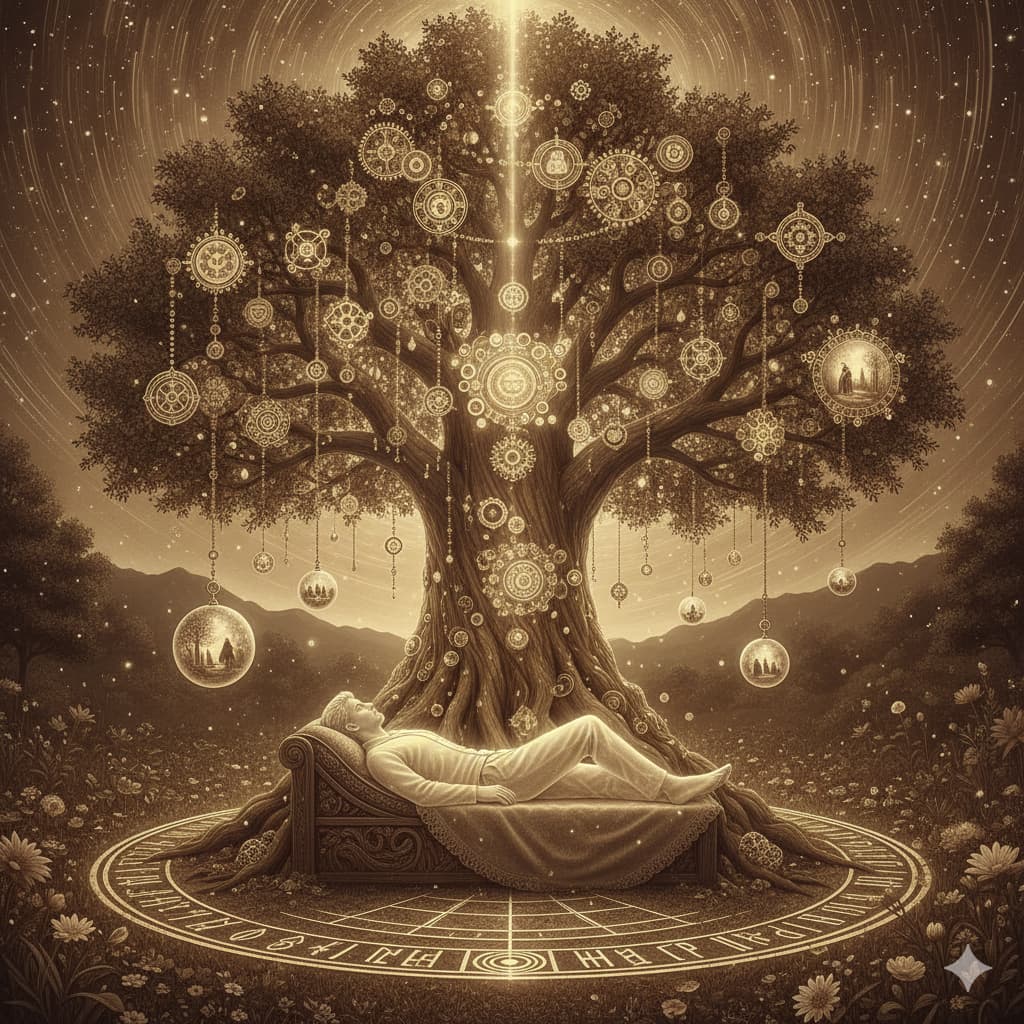
Temperaments and Holiness: How Your Personality Leads to Sanctity
1. The Foundation: What Is Temperament?
Temperament is the biological and emotional hardware with which you were born. It is the set of instinctive reactions, energy levels, and emotional dispositions that come pre‑recorded in your genetic code. You did not choose it; you received it as a gift from the Creator, who delights in diversity. “Os temperamentos não são destino, mas ponto de partida para a santidade — e a Igreja Católica tem muito a ensinar sobre isso” (temperaments are not destiny, but the starting point for holiness — and the Catholic Church has much to teach about this).
The four classical temperaments — rooted in the ancient medicine of Hippocrates and Galen, and later refined by medieval thinkers including Saint Thomas Aquinas — are:
Choleric: Fast, decisive, strong‑willed, and prone to anger. The leader, the builder, the crusader.
Sanguine: Warm, enthusiastic, sociable, and easily distracted. The life of the party, the optimist, the lover of novelty.
Melancholic: Deep, sensitive, reflective, and prone to sadness. The artist, the philosopher, the contemplative.
Phlegmatic: Calm, steady, peaceful, and sometimes inert. The mediator, the loyal friend, the quiet worker.
Each temperament carries specific strengths and specific vulnerabilities. The choleric’s strength — decisive action — can degenerate into domination and rage. The melancholic’s depth can curdle into envy and self‑pity. The sanguine’s joy can become dissipation and inconstancy. The phlegmatic’s peace can sink into acedia — spiritual sloth.
But here is the crucial distinction: temperament is not character. Character is what you build through the exercise of your will and the reception of grace. Temperament is the raw material; character is the cathedral you construct upon it. And holiness is the light that shines through that cathedral’s windows.
2. The Map of the Soul: The Enneagram Through a Catholic Lens
In recent decades, the Enneagram has emerged as a powerful tool for self‑understanding. A nine‑pointed figure illustrating nine distinct personality types, the Enneagram analyzes not only behavior but the deeper passions, fixations, and defense mechanisms that drive us. Each type is characterized by a particular “capital vice” — anger, pride, envy, avarice, fear, gluttony, lust, sloth — and a corresponding virtue that awaits cultivation.
Used with prudence and discernment, the Enneagram can serve as a map of our interior geography. It does not tell us who we are in God (our identity as beloved children is infinite), but it reveals the familiar, rugged terrain we tend to traverse when we are distant from our true essence. It exposes the masks — the egos — that we build to survive.
The nine types are traditionally grouped into three Triads, each centered on a different emotional driver:
The Instinctive Triad (Types 8, 9, 1) – Anger and Control
These types live in the gut. They process reality through action, intuition, and immediate reaction. Their underlying emotion is anger — expressed, repressed, or narcotized.
Type 8 (The Challenger): Passion = Lust (excess, intensity). Virtue = Innocence – learning that strength serves others, not dominates them.
Type 9 (The Peacemaker): Passion = Acedia (spiritual sloth, self‑forgetting). Virtue = Right Action – waking up to one’s own importance and mission.
Type 1 (The Reformer): Passion = Wrath (resentment, perfectionism). Virtue = Serenity – resting in God’s order, not one’s own.
The Feeling Triad (Types 2, 3, 4) – Image and Shame
These types live in the heart. They seek affection, validation, and identity. Their underlying emotion is shame — the painful sense of inadequacy.
Type 2 (The Helper): Passion = Pride (the pride of being necessary). Virtue = Humility – loving without needing to be needed.
Type 3 (The Achiever): Passion = Vanity/Self‑Deceit. Virtue = Authenticity – removing the mask of performance and living in truth.
Type 4 (The Individualist): Passion = Envy (existential lack). Virtue = Equanimity – finding grace in the ordinary, not only the extraordinary.
The Thinking Triad (Types 5, 6, 7) – Fear and Insecurity
These types live in the head. They seek security, knowledge, and certainty. Their underlying emotion is fear — the anxiety that the world is dangerous and that they must be prepared.
Type 5 (The Investigator): Passion = Avarice (hoarding knowledge and energy). Virtue = Detachment – trusting that God supplies all needs.
Type 6 (The Loyalist): Passion = Fear/Cowardice. Virtue = Courage/Faith – acting in spite of fear, trusting in Providence.
Type 7 (The Enthusiast): Passion = Gluttony (insatiability for experiences). Virtue = Sobriety – being fully present to the moment God has given.
The Enneagram is not astrology. It is not determinism. It is a diagnostic instrument — nothing more, nothing less. When used under the guidance of a spiritual director or a faithful Catholic therapist, it can illuminate the specific “door” through which the enemy most often enters your soul. As the Vatican’s document Jesus Christ, the Bearer of the Water of Life cautioned, any tool that reduces sin to mere personality traits or denies free will must be rejected. But the Enneagram, rightly understood, does not replace sin with psychology; it reveals the psychological patterns through which sin gains a foothold.
3. The Path of Integration: From Passion to Virtue
The great principle of Catholic moral theology is that evil is parasitic. Sin is always a good desire that has been distorted, twisted, or taken in excess. The choleric’s desire for justice becomes wrath. The sanguine’s desire for joy becomes dissipation. The melancholic’s desire for beauty becomes envy.
Holiness, therefore, is not the destruction of the desire — which would be a mutilation of our God‑given nature — but its purification and redirection.
This is the work of a lifetime. It requires:
Self‑knowledge (the purpose of the temperaments and the Enneagram) – to see clearly the raw material we have been given.
Ascesis (spiritual discipline) – to “train” the will through repeated acts of the opposite virtue. The choleric must practice meekness; the melancholic, gratitude; the sanguine, constancy; the phlegmatic, initiative.
Grace – the unearned, superabundant life of God that alone can raise nature to its supernatural destiny.
St. Thomas Aquinas famously wrote: “Gratia non tollit naturam, sed perficit.” Grace does not destroy nature; it perfects it. God will not turn a choleric into a phlegmatic, for that would be to destroy the work of His creation. He will transform that choleric into a holy choleric — someone whose natural fire has been purified in the furnace of divine love.
4. Saints for Every Temperament: The Communion of Personalities
One of the most consoling truths of Catholic spirituality is that there is a saint who shares your temperament. The Church is not a garden of identical roses; it is a vast, wild biodiversity of souls, each reflecting the Infinite in a unique way.
St. Peter – a classic Type 8 (Challenger): impulsive, strong, protective, and given to outbursts. After his integration, his strength became not the sword that cuts off ears, but the rock upon which the Church is built.
St. Thérèse of Lisieux – often seen as a Type 2 (Helper) / Type 4 (Individualist) blend: deeply sensitive, desiring love, and prone to the melancholy of feeling “small.” Her “Little Way” transformed her sensitivity into an offering of love.
St. Thomas Aquinas – the quintessential Type 5 (Investigator): reserved, intellectual, and prone to mental avarice. At the end of his life, after a mystical vision, he declared all his writings “straw” — his detachment complete.
St. Francis of Assisi – a Type 4 (Individualist) / Type 7 (Enthusiast): the poetic visionary who sought beauty and joy. His insatiability for life was redirected into a cosmic fraternity with all creation.
St. Joseph – a model for Type 9 (Peacemaker) and Type 6 (Loyalist): silent, steady, and obedient. When the angel spoke, he did not argue or delay. He rose and acted with courageous faith.
As the Church teaches, “Diversity in God’s Garden” is not a weakness but a glory. Different flowers receive the same sun, but each reveals that sun in a different color. Your temperament is not a flaw to be eradicated. It is a facet of the diamond that is your soul, waiting to catch the light of grace.
5. A Warning and an Invitation: The Right Use of Self‑Knowledge
Here a pastoral caution is necessary. Not every tool is safe for every soul. The Enneagram, in particular, has been criticized by some bishops and theologians for its obscure origins (including possible roots in Sufi mysticism and the teachings of Gurdjieff) and for its potential to foster a deterministic, self‑absorbed spirituality that diminishes the role of free will and grace. Some practitioners have indeed presented it as a path to “enlightenment” or “higher states of consciousness” — claims that are incompatible with Catholic faith.
The answer is not to reject all psychological tools, but to use them subordinate to revelation and under the guidance of the Church. The four temperaments, with their ancient pedigree and endorsement by saints such as Thomas Aquinas and Hildegard of Bingen, carry no such ambiguity. The Enneagram, when stripped of its pseudo‑mystical packaging and employed merely as a descriptive map of ego defenses, can also be of real service — provided the user remains firmly anchored in the sacraments, spiritual direction, and the teaching authority of the Church.
In other words: use the map, but do not worship the map. Do not say, “I am a Type Four, therefore I will always be melancholy.” Say instead: “I have a tendency toward melancholy, but in Christ I have the grace of equanimity.” The label is a servant, not a master.
6. Going Deeper: The Full Manual on Temperaments and Holiness
What you have read here is only the beginning. A full, systematic treatment of the temperaments, the Enneagram, and the path of integration would require far more than a single article.
That is why SPW Worship has prepared a complete Manual on Temperaments and Holiness — a free, downloadable PDF that guides you through:
A detailed exploration of each of the four classical temperaments and the nine Enneagram types
The theological distinction between nature and grace, temperament and character
The “passions” (capital vices) specific to each type and the virtues that heal them
The arrows of integration — how we move in stress and in health
Practical spiritual exercises tailored to each temperament
A gallery of saints for every type, showing that holiness is possible for everyone
A concluding prayer of consecration of your limits and gifts to the Holy Spirit
This manual is not a psychological test to be taken lightly. It is a workbook for the soul — a companion for your journey from the false self (the ego, the mask) to the true self (the beloved child of God, fully alive in Christ).
7. Conclusion: You Are Already Called
You do not need to become someone else to become a saint. You need only become who you already are in Christ — fully, freely, and without reserve. The choleric’s fire, the melancholic’s depth, the sanguine’s joy, the phlegmatic’s peace: all of it is raw material for the Kingdom.
Start today. Look at your patterns without judgment. Identify your dominant passion — the vice that most consistently trips you. Then, with the help of a confessor or spiritual director, choose one small act of the opposite virtue. Repeat it. Let grace do its work.
And when you are ready to go deeper, download the full manual. It is waiting for you.
Download the Complete Manual
📖 Temperaments and Holiness: Identifying Your Type and Educating It for Virtue
A complete guide to self-knowledge, integration, and the path to sanctity — rooted in Catholic theology, classical psychology, and the wisdom of the saints.
👉 Download the free PDF here:
https://spwworship.com/the-manual
May the Holy Spirit, who alone searches the depths of the human heart, illuminate your path. And may you discover, to your everlasting joy, that the saint God is calling you to be is already the person He created you to become.
Most Sacred Heart of Jesus, have mercy on us.
Our Lady of Sorrows, teach us to know ourselves.
All you saints of every temperament, pray for us.
Connect
Join our community for uplifting worship content
Contact
Subscribe
apocrifo1815@gmail.com
© 2026. All rights reserved.