Daily Word: Matthew 10:26-33 – Fear No One, Trust the Father | Sunday, June 21
The prophet Jeremiah was terrified, yet he trusted. Jesus commands us: do not fear those who kill the body. A 4-minute reflection on courage, Providence, and fearless witness.
DAILY WORD
spwworship
6/20/20264 min read

Scripture Reference: Matthew 10:26-33 (12th Sunday in Ordinary Time, Year A)
First Reading: Jeremiah 20:10-13
Second Reading: Romans 5:12-15
“Fear no one. Nothing is concealed that will not be revealed, nor secret that will not be known.” (Matthew 10:26)
Fear is the oldest enemy of faith. It is the voice that whispers in the garden, “You will be like gods” — and then, when we fall, it makes us hide among the trees. Fear isolates, paralyzes, and distorts reality. It tells us that the threat is greater than the protection, that the enemy is stronger than the Friend.
In today’s Gospel, Jesus looks at His disciples — ordinary men about to be sent into a hostile world — and speaks the command that echoes through every age: “Do not be afraid.” He says it not once, but three times in this short passage. Why? Because He knows how deeply fear grips the human heart.
And the First Reading gives us a vivid portrait of that fear — and the faith that overcomes it.
Jeremiah: The Prophet Who Trusted in the Dark
The prophet Jeremiah is often called the “weeping prophet.” His life was a daily martyrdom. In today’s reading (Jeremiah 20:10-13), he cries out in anguish:
“I hear the whisperings of many: ‘Terror on every side! Denounce him! Let us denounce him!’ All my friends are waiting for me to stumble: ‘Perhaps he will be trapped, and we will prevail, and take our revenge on him.’”
Imagine this scene. His own friends — people he trusted — are plotting against him. They are spreading rumors, waiting for him to fall. The whisperings are relentless. Jeremiah is isolated, betrayed, and terrified.
And yet — in the same breath — he declares:
“But the LORD is with me, like a mighty champion: my persecutors will stumble, they will not triumph.”
Jeremiah does not deny his fear. He does not pretend he is brave. He admits the terror — and then he chooses to trust. He proclaims: “Sing to the LORD, praise the LORD, for he has rescued the life of the poor from the power of the wicked!”
Jeremiah is praising God before the rescue has fully happened. That is faith. That is the courage Jesus is about to command.
Jesus Speaks to the Fearful Heart
Now listen to Jesus in the Gospel. He is sending His disciples into a world that will reject them. He tells them plainly: “Do not fear those who kill the body but cannot kill the soul.”
Jesus does not pretend that persecution is not real. He does not minimize the danger. What He does is redefine the threat. The worst thing enemies can do is destroy the physical body. But your soul — your relationship with the Father — that is untouchable.
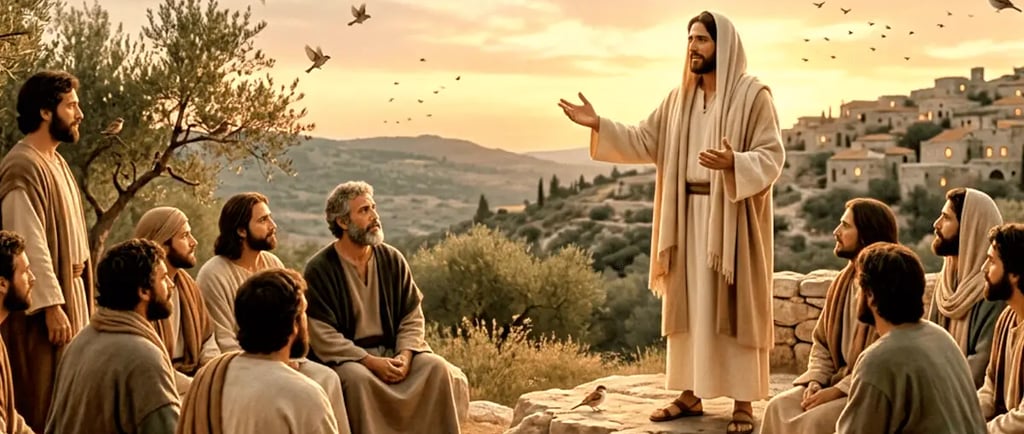
Then He points to the sparrows: “Are not two sparrows sold for a penny? Yet not one of them falls to the ground without your Father’s knowledge.” In the ancient world, sparrows were the cheapest of animals — practically worthless. And yet God watches over every single one. “Do not be afraid; you are worth more than many sparrows.”
This is not a platitude. This is the deepest theology of Providence. The Father who counts the hairs on your head — who knows the fall of a tiny sparrow — is the same Father who holds your life in His hands. Nothing touches you that does not pass through His love.
The Connection: From Jeremiah’s Terror to Jesus’ Command
Jeremiah and Jesus are speaking to the same human condition: the fear of betrayal, the dread of public shame, the terror of persecution.
Jeremiah experienced the whisperings of his friends. Jesus tells His disciples that nothing hidden will remain hidden — but that should be a comfort, not a threat. The truth will come out. The lies of the enemies will be exposed.
Jeremiah trusted in the “mighty champion” who stood with him. Jesus reveals that this champion is the Father Himself, who values His children above sparrows.
Jeremiah praised God before deliverance came. Jesus promises that those who acknowledge Him before men will be acknowledged before the Father in heaven.
The prophet and the Lord both point to the same reality: fear is real, but God is greater.
What This Means for Your Sunday
Perhaps today you are afraid. You fear the whisperings of others. You fear the loss of reputation, a relationship, a job, or even your life. You hear the “Terror on every side!” and you want to hide.
Jesus is speaking to you directly: “Do not be afraid.”
Acknowledge your fear. Like Jeremiah, name it honestly. Do not pretend to be stronger than you are.
Anchor your fear in a greater truth. You are worth more than sparrows. The Father sees you. He counts your tears and your hairs.
Speak your trust aloud. Even if your heart is trembling, say: “The Lord is with me, like a mighty champion.” Faith is often a decision, not a feeling.
And then — acknowledge Jesus. The ultimate antidote to fear is not the absence of danger, but the presence of Christ. When you acknowledge Him in the small moments — with a kind word, a refusal to gossip, a prayer whispered in public, a moral stand — you are storing up courage for the great moments.
A Short Prayer
Lord Jesus, You know my fears — the ones I speak and the ones I hide. Like Jeremiah, I hear the whisperings of my enemies and sometimes even of my friends. But You say: “Do not be afraid.” Give me the courage of the prophet, who praised You in the dark. Help me to acknowledge You today — in my words, my choices, and my silence. And when the terror rises, remind me: I am worth more than many sparrows. You are my mighty champion. Amen.
Connect
Join our community for uplifting worship content
Contact
Subscribe
apocrifo1815@gmail.com
© 2026. All rights reserved.