Daily Word: Matthew 11:20-24 – The Woes of Unrepentant Cities | Tuesday, July 14
Jesus reproaches Chorazin, Bethsaida, and Capernaum for their unbelief. A 4-minute reflection on the danger of spiritual privilege without repentance.
DAILY WORD
spwworship
7/14/20263 min read
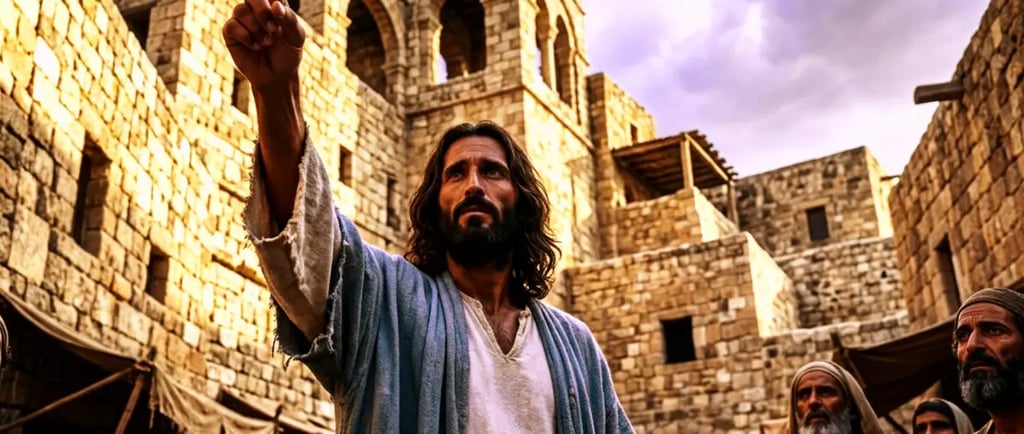
Scripture Reference: Matthew 11:20-24 (Tuesday of the 15th Week in Ordinary Time)
"Woe to you, Chorazin! Woe to you, Bethsaida! For if the mighty deeds done in your midst had been done in Tyre and Sidon, they would long ago have repented in sackcloth and ashes." (Matthew 11:21)
The tone of today's Gospel is somber. Jesus has been performing miracles, teaching with authority, and revealing the Kingdom. But the response has been disappointing. The cities of Galilee — Chorazin, Bethsaida, and Capernaum — have witnessed His mighty deeds and yet have not repented.
Jesus does not mince words. He pronounces "woes" upon them — not curses, but laments. He is not gloating; He is grieving. He has offered them the greatest gift, and they have rejected it. Their privilege has become their condemnation.
This is a sobering passage. It reminds us that to whom much is given, much will be required (Luke 12:48). The more we have received, the more accountable we are. The light we have been given will become either a source of warmth or a witness against us.
The Geography of Grace
Chorazin and Bethsaida were small towns near the Sea of Galilee. They were not major cities; they were ordinary places. But they had witnessed extraordinary things. Jesus had healed the sick, opened blind eyes, and proclaimed the Kingdom in their streets. They had no excuse for unbelief.
Capernaum was Jesus' adopted hometown, the center of His Galilean ministry. It had been elevated to the heavens — chosen as the place where the Son of God would dwell and work. But Capernaum did not respond. Its spiritual privilege became its spiritual peril.
Jesus compares them to Tyre and Sidon — pagan cities known for their wickedness. If Jesus had performed His miracles in those pagan cities, they would have repented in sackcloth and ashes. But the cities of Galilee, who should have known better, remained stubborn.
The Danger of Spiritual Privilege
This passage challenges the assumption that proximity to grace guarantees salvation. It does not. Being raised in a Catholic home, attending Mass every Sunday, or even witnessing miracles does not automatically transform the heart. The heart must respond. It must repent. It must believe.
The people of Chorazin, Bethsaida, and Capernaum saw Jesus with their own eyes. They heard His words. They watched Him heal. And yet, they did not change their lives. Their familiarity with Jesus bred contempt, or at least complacency.
This is a warning for us. We have received the fullness of revelation. We have the Scriptures, the sacraments, the teaching of the Church, and the witness of the saints. We have access to the Eucharist, the very Body and Blood of Christ. We have no excuse for lukewarm faith.
The Scandal of Unbelief
Jesus says that Tyre and Sidon would have repented if they had seen what Chorazin and Bethsaida saw. This is a shocking statement. The pagan cities, notorious for their sin, would have responded with humility and repentance. But the cities of Galilee, who should have known better, remained hard-hearted.
This is the scandal of unbelief: those who have the most light often produce the least fruit. The familiar becomes the ordinary. The extraordinary becomes routine. We stop being amazed by grace.
As C.S. Lewis wrote, "The terrible thing, the almost impossible thing, is to hand over your whole self — all your wishes and precautions — to Christ." The people of Galilee saw Jesus and kept their hands tightly closed. They refused to surrender.
The Judgment of Capernaum
"And you, Capernaum, will you be exalted to heaven? You will go down to the netherworld."
Capernaum had been lifted up. It was the place where Jesus lived, taught, and healed. It was the headquarters of His Galilean mission. But its exaltation became its downfall. Because it did not respond to grace, it would be brought low.
The principle is clear: great privilege brings great responsibility. When we are given much, much is expected. If we squander the gifts God has given us — the gift of faith, the gift of the sacraments, the gift of the Church — we will be judged more severely than those who never had those gifts.
What This Means for Your Tuesday
Today, examine your response to grace.
Have you become complacent? Do you take the Eucharist, the Scriptures, and the Church for granted?
Have you witnessed God's work but failed to repent? Have you seen His goodness and responded with indifference?
What would it take for you to repent in sackcloth and ashes? What is holding you back from a radical surrender?
This passage is not meant to frighten us; it is meant to awaken us. It is a call to examine our hearts and to respond to grace with gratitude, humility, and obedience.
Do not wait until it is too late. Today is the day of salvation. Today, hear His voice and harden not your heart.
Listen to the following song from our channel, and follow us for more content.
A Short Prayer
Lord Jesus, I confess that I have often taken Your grace for granted. I have seen Your goodness and responded with indifference. Forgive me. Soften my heart. Let me not be like Chorazin, Bethsaida, or Capernaum — blind to the wonders You have done in my midst. Give me the humility of Tyre and Sidon, who would have repented. Today, let me turn from my sins and cling to You. Amen.

Connect
Join our community for uplifting worship content
Contact
Subscribe
apocrifo1815@gmail.com
© 2026. All rights reserved.