Daily Word: Matthew 5:17-19 – Fulfillment, Not Abolition | Wednesday, June 10
Jesus did not come to erase the Old Law but to complete it. What does this mean for your daily obedience? A 4-minute reflection on grace and the commandments.
DAILY WORD
spwworship
6/10/20263 min read
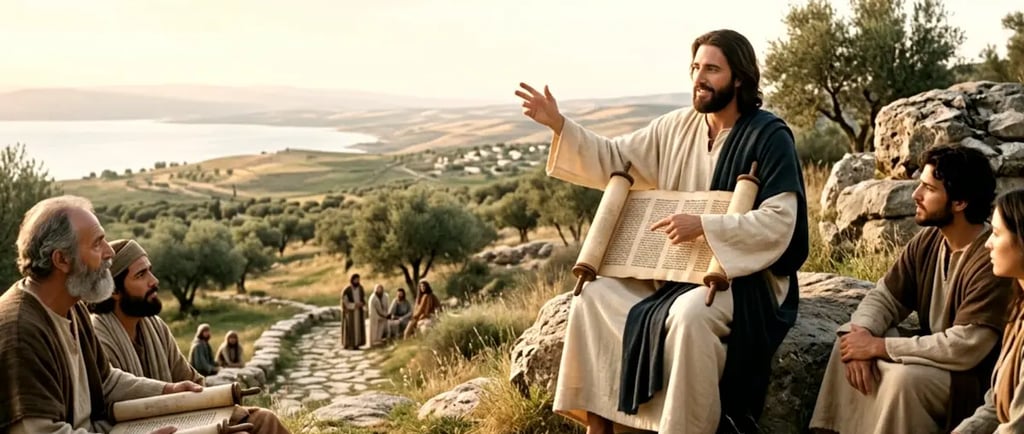
Scripture Reference: Matthew 5:17-19 (Wednesday of the 10th Week in Ordinary Time)
“Do not think that I have come to abolish the Law or the Prophets. I have come not to abolish but to fulfill.” (Matthew 5:17)
The Sermon on the Mount continues. Jesus has just called His disciples salt and light. Now He addresses a dangerous misunderstanding that could easily arise among His listeners.
Some might think: “Jesus is teaching something new. He speaks with authority. So the old Law of Moses is obsolete, right?”
Wrong. Jesus shuts down that idea immediately. He did not come to tear down the Law or the Prophets — the very Scriptures that spoke of Him. He came to fulfill them. And until heaven and earth pass away, not a single letter — not even the smallest stroke of a pen — will lose its power until everything is accomplished.
This is a radical statement about the unity of God’s plan. The Old Testament is not a discarded rough draft. It is a promise waiting to be embraced by the One who wrote it.
What Does “Fulfill” Mean?
To fulfill the Law means:
To complete it. The Law was a shadow (Colossians 2:17) — a schoolmaster leading to Christ (Galatians 3:24). Jesus is the reality to which the shadow pointed. The sacrifices prefigured His cross. The priesthood prefigured His eternal intercession. The Passover prefigured His Eucharistic body.
To live it perfectly. Where Israel failed, Jesus succeeded. He obeyed every commandment perfectly — not by legalistic burden, but by love. He is the faithful Israelite, the righteous Adam, the obedient Son.
To reveal its deepest meaning. The Pharisees had reduced the Law to external rules. Jesus digs deeper: not just “do not murder” but do not be angry; not just “do not commit adultery” but do not lust. He does not loosen the Law; He tightens it — from actions to the heart.
The Danger of Loosening Even the Smallest Commandment
Jesus then issues a sobering warning: “Whoever relaxes one of the least of these commandments and teaches others to do the same will be called least in the kingdom of heaven.”
This is countercultural. The world tells us that some sins are no big deal — “everyone does it.” A little white lie. A little gossip. A small compromise at work. But Jesus says that even the smallest commandment matters.
Why? Because the commandments are not arbitrary rules. They are signposts pointing to love — love of God and love of neighbor. To “relax” a commandment is to say that love matters less than convenience. And that is a dangerous path.
However, note the paradox: those who relax the Law are still in the kingdom — but as the “least.” This is both mercy (they are not cast out) and warning (there are degrees of glory). Meanwhile, those who practice and teach the commandments will be called great in the kingdom.
The Catholic Understanding: Grace Does Not Cancel Law
Some Christians have fallen into the error of “antinomianism” — the belief that grace frees us from all moral law. That is not what Jesus taught. St. Paul explicitly says: “Do we then overthrow the law by this faith? By no means! On the contrary, we uphold the law” (Romans 3:31).
The Catholic Church teaches that the moral law — the Ten Commandments, the natural law written on every human heart — is permanent and universal. Grace does not abolish it; grace empowers us to live it. As St. Augustine said: “Give what You command, and command what You will.”
What changes in the New Covenant is not the standard of goodness, but the power to achieve it. The Law shows us our sin; grace gives us a Savior. The Law condemns; grace forgives and heals.
What This Means for Your Wednesday
Take a moment to examine your own attitude toward the “small” commandments. Do you excuse yourself from:
A kind word when you feel grumpy?
A moment of prayer when you are tired?
Honesty in a small transaction?
Patience with a difficult family member?
These are not “little things.” They are the building blocks of holiness. The person who is faithful in small things will be faithful in large ones (Luke 16:10).
And if you have fallen? Do not despair. Fulfillment does not mean perfection on your own. It means leaning into the One who fulfilled the Law for you. Go to confession. Receive His mercy. Then, with renewed joy, practice the least commandment as an act of love.
A Short Prayer
Lord Jesus, You fulfilled the Law when I could not. Forgive me for the times I have treated Your commandments as optional. Give me a love for even the smallest precepts — not as a burden, but as a path to freedom. Help me to practice what I believe and to teach others by my example. Let Your fulfillment become my joy. Amen.
Connect
Join our community for uplifting worship content
Contact
Subscribe
apocrifo1815@gmail.com
© 2026. All rights reserved.