Daily Word: Matthew 6:7-15 – The Our Father, Key to Forgiveness | Thursday, June 18
Jesus teaches us to pray the Our Father and links our forgiveness to forgiving others. A deep 4-minute reflection on trust, mercy, and the heart of prayer.
DAILY WORD
spwworship
6/18/20264 min read
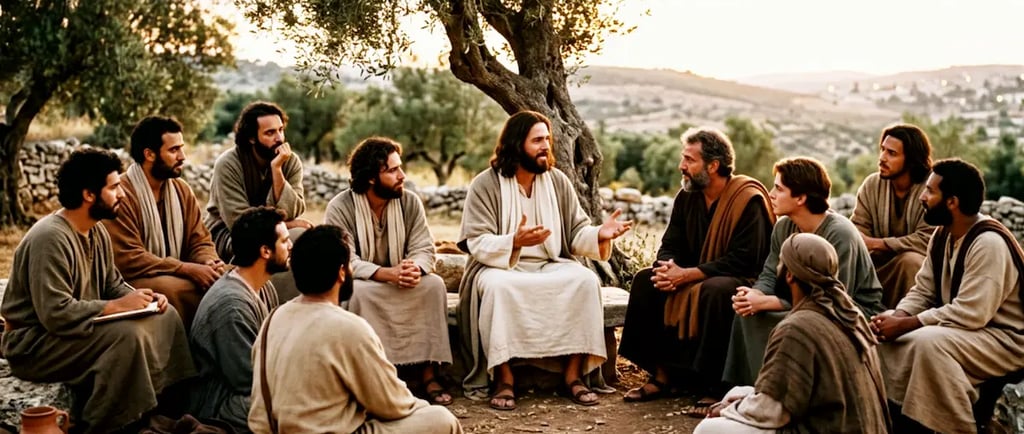
Scripture Reference: Matthew 6:7-15 (Thursday of the 11th Week in Ordinary Time)
“In praying, do not babble like the pagans, who think that they will be heard because of their many words.” (Matthew 6:7)
Jesus continues His instruction on prayer. He has already taught about the secret place, away from the eyes of others. Now He addresses the content of prayer — and the intention behind it.
The pagans of the ancient world believed that the gods were distant, deaf, and easily offended. To get their attention, one had to recite long, repetitive incantations, flattering titles, and desperate pleas. Prayer was a performance to appease irritable deities.
Jesus shatters that image. “Your Father knows what you need before you ask him.” Prayer is not a transaction or a magic spell. It is the trusting conversation of a child with a loving parent. And because the Father already knows, we do not need to be eloquent or verbose. We need only to be authentic.
Then Jesus gives them — and us — the perfect prayer: the Our Father. It is brief, complete, and revolutionary. Every petition places us in right relationship with God and with one another.
The Structure of the Our Father: Heaven Meets Earth
The prayer Jesus teaches is a masterclass in theology and psychology. It has seven petitions, divided into two parts: the first three concern God’s glory; the last four concern our human needs.
1. “Our Father who art in heaven” — This is the foundation. God is not a distant force. He is Father. And He is our Father — not just “mine,” but “ours.” Prayer is personal and communal.
2. “Hallowed be thy name” — We ask that God’s name be treated as holy, first in our own hearts, then in the whole world. It is a prayer for the sanctification of our speech and actions.
3. “Thy kingdom come” — We long for the reign of God to be fully established. This is a missionary prayer, a cry for justice, peace, and conversion.
4. “Thy will be done on earth as it is in heaven” — We surrender our will to God’s. Not passive resignation, but active cooperation. Heaven’s will is perfect obedience; we ask for that same heart on earth.
5. “Give us this day our daily bread” — We trust God for the present moment. Not tomorrow’s provisions, but today’s. This is an antidote to anxiety.
6. “Forgive us our trespasses, as we forgive those who trespass against us” — This is the hinge of the entire prayer. Notice the condition: we ask to be forgiven in the same measure that we forgive others. It is both a plea and a pledge.
7. “Lead us not into temptation, but deliver us from evil” — We acknowledge our weakness and ask for protection. We cannot resist on our own.
The One Teaching Jesus Comments On
Most of the Our Father is given without further explanation. But Jesus stops to comment on one petition: forgiveness.
“If you forgive others their transgressions, your heavenly Father will forgive you. But if you do not forgive others, neither will your Father forgive your transgressions.”
This is chilling. It is also liberating. Jesus does not say, “If you are perfect in everything else, you will be forgiven.” He points to one thing — the one thing that often blocks grace: unforgiveness.
Psychologically, holding a grudge is like drinking poison and expecting the other person to die. It destroys us from within. It hardens the heart, blocks joy, and chokes the flow of God’s mercy. When we refuse to forgive, we are not punishing our enemy; we are imprisoning ourselves.
Spiritually, forgiveness is the condition for receiving forgiveness. This is not because God is stingy with mercy, but because the capacity to receive mercy requires a heart that is merciful. A closed heart cannot receive. An open heart — open even to the one who hurt us — is the only vessel large enough to hold divine grace.
What This Means for Your Thursday
Take a moment to examine your heart. Is there someone you have not forgiven? A parent, an ex-friend, a colleague, a former spouse, someone in your parish? You may have valid reasons for your pain. But Jesus does not ask if they deserve forgiveness. He asks if you will release the debt.
Today, when you pray the Our Father, pause at the fifth petition. Say it slowly: “Forgive us our trespasses, AS we forgive those who trespass against us.” When you say “as,” you are making a promise. You are asking God to hold you to that standard.
If you cannot forgive, ask for the grace to begin. Say: “Lord, I cannot forgive this person on my own. Give me the strength to want to forgive. I open the door — come in and heal me.”
A Short Prayer
Our Father, who art in heaven, hallowed be thy name. Thy kingdom come, thy will be done, on earth as it is in heaven. Give us this day our daily bread. Forgive us our trespasses, as we forgive those who trespass against us. Lead us not into temptation, but deliver us from evil. Amen.
Lord Jesus, I know there is someone I have not fully forgiven. I bring that wound to You today. Take my bitterness and replace it with Your mercy. Give me the courage to release the debt. And as I pray this prayer, let it become true in my heart — not just on my lips. Amen.
Connect
Join our community for uplifting worship content
Contact
Subscribe
apocrifo1815@gmail.com
© 2026. All rights reserved.